Good things come in 3s: New publications arising from EU funded collaborations on biomarker research and discovery
We are pleased to have been involved in this trio of papers examining biomarkers and genetic modifiers in Duchenne Muscular Dystrophy (DMD) and Becker Muscular Dystrophy (BMD). These studies were based on collaborative work under the BIO-NMD project led led by Alessandra Ferlini and funded by the European Union’s Seventh Framework Program from 2010-2012. Biomarkers are characteristics that can be used to monitor disease progression, response to treatment, and prognosis, while genetic modifiers are genes that can affect the expression of other genes and influence the phenotype of a patient. The discovery of biomarkers and genetic modifiers allows for more personalized treatments and advice to patients. While the publication of these papers may have taken longer than the funding duration, this does demonstrate the ability of research projects to have long-term impact many years following the conclusion of a project.
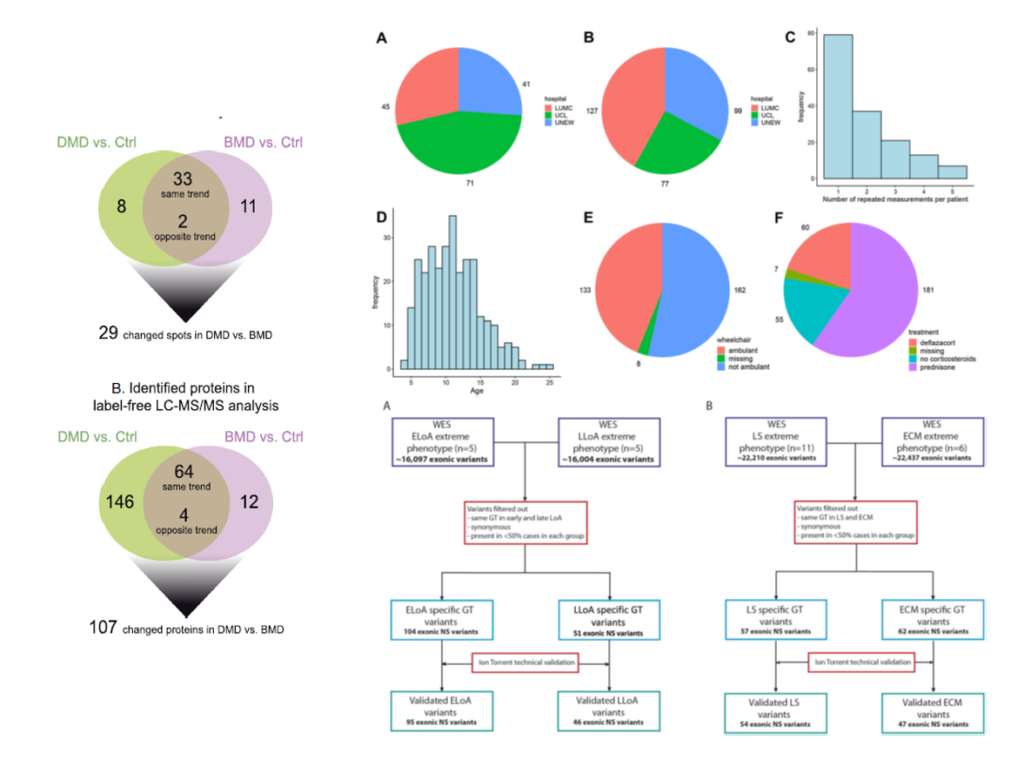
Capitanio et al., 2020 Showed mechanosensing and metabolic dysfunction as central features of BMD and DMD, with DMD demonstrating further dysregulation in extracellular matrix composition.
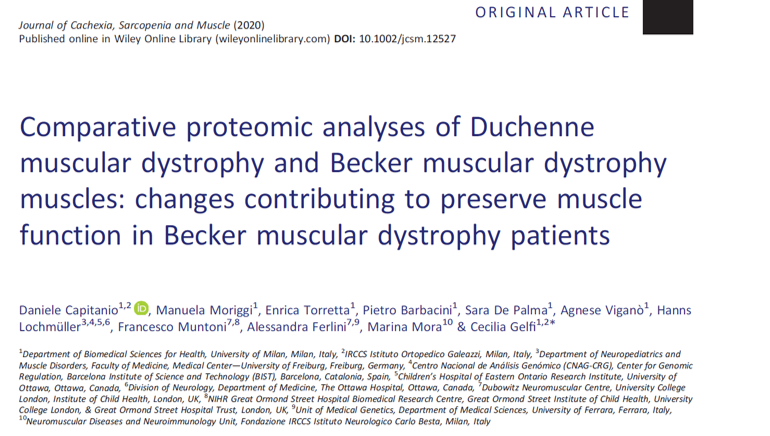
Is available open access on the Journal of Cachexia, Sarcopenia and Muscle website.
Spitali et al., 2020 demonstrated that variants in TCTEX1D1 on chromosome 1 were associated with age of ambulation loss.
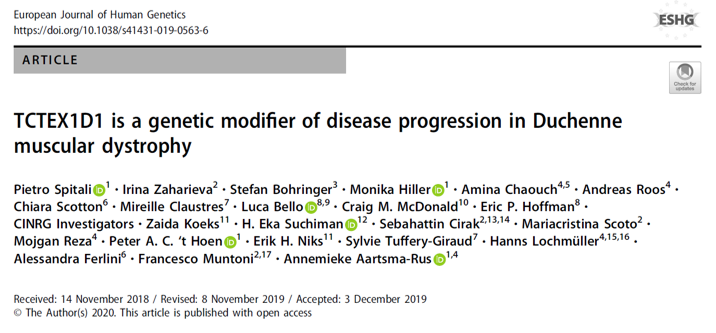
Is available open access on the European Journal of Human Genetics website.
Signorelli et al., 2019 revealed that serum levels of MDH2 correlated with disease stage and response to treatment with corticosteroids; furthermore, they were associated with the risk of wheelchair dependency and pulmonary function.
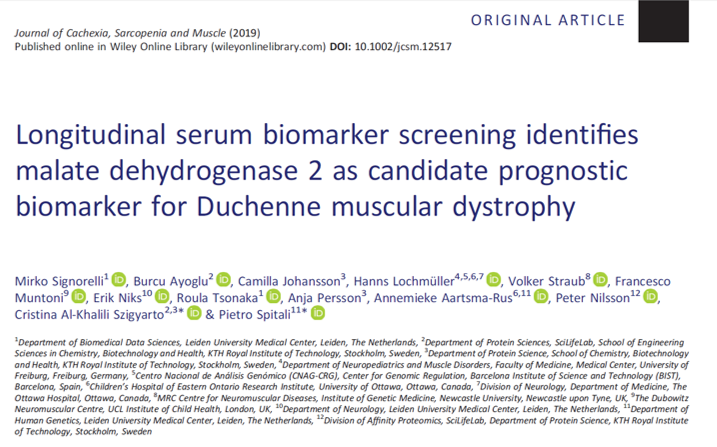
Is available open access on the Journal of Cachexia, Sarcopenia and Muscle website.
Read next...

Graham Mainwood Lecture – Dr. Markus A. Rüegg

PhD completion – Congratulations!
New Publications Alert!

Meet The Lochmüller group’s Newest Members!